The Christian Cross Icon in Isometric 3D: A Practical Guide to Use, Integration, and Workflow
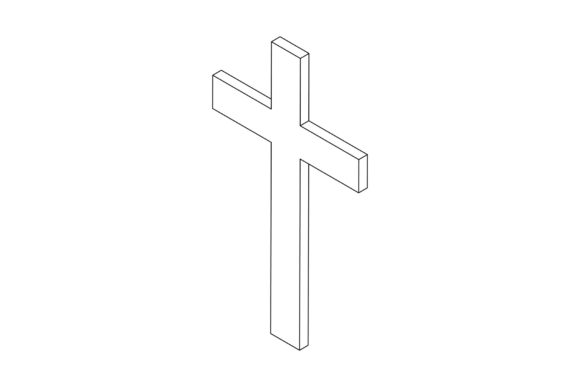
The Christian cross icon rendered in isometric 3D is more than a decorative asset. It is a deliberate design choice that brings depth, clarity, and visual consistency to digital and print projects. Whether you are a creator building a presentation, a marketer developing a campaign, or a small business owner refining your brand identity, understanding how to work with this icon effectively will save you time and improve your output.
Isometric 3D refers to a projection method where three axes are equally foreshortened, creating a pseudo-three-dimensional view without true perspective distortion. When applied to a Christian cross icon, the result is a symbol that feels tangible, balanced, and modern. It retains its sacred meaning while fitting naturally into contemporary design systems, user interfaces, and marketing materials.
Where the Christian Cross Icon in Isometric 3D Fits in a Broader Process
Every design asset exists within a workflow. The Christian cross icon in isometric 3D is no exception. It serves as a visual anchor that can be deployed at multiple stages of a project, depending on your goals.
- During the planning phase: Use the icon to communicate tone and direction. If you are building a brand identity for a faith-based organization, a nonprofit, or a community initiative, the isometric style signals modernity while respecting tradition. It helps stakeholders visualize the final look before full development begins.
- During the creation phase: Integrate the icon into mockups, wireframes, or prototypes. Because isometric graphics read well at various sizes, you can test placement in headers, app icons, or print layouts without losing legibility or impact.
- During the revision and delivery phase: The icon's consistent geometry makes it easy to recolor, resize, or combine with other isometric elements. This reduces rework and keeps your asset pipeline efficient.
By treating the Christian cross icon in isometric 3D as a functional component rather than a standalone graphic, you align it with real project milestones. This approach ensures the icon supports your objectives rather than simply decorating a page.
Before the Project: Preparation and Asset Planning
When you are in the early stages of a website redesign, a presentation deck, or a product launch, the Christian cross icon in isometric 3D can help define your visual language. Consider the following preparation steps:
- Audit your current assets: Check whether your existing icon set includes an isometric variant. If not, the Christian cross icon can serve as a pilot for expanding your library into 3D-style graphics.
- Define color and lighting consistency: Isometric 3D icons rely on a consistent light source and shadow direction. Decide on a light angle (commonly top-left or top-right) and ensure the Christian cross icon matches that standard. This preparation prevents visual inconsistencies later.
- Test file formats: Determine whether you need a vector format like SVG for scalability or a raster format like PNG for quick use. The Christian cross icon in isometric 3D is often available in both, but preparing your pipeline ahead of time avoids conversion delays.
During the Project: Integration and Execution
As the project moves into active development, the Christian cross icon in isometric 3D becomes a working asset. Here is how to integrate it smoothly:
- In user interfaces: Use the icon for navigation elements, buttons, or feature highlights. Because isometric icons have depth, they draw the eye without being distracting. Place them on solid backgrounds to maintain contrast.
- In marketing materials: Email headers, social media graphics, and landing pages benefit from the dimensional quality of isometric 3D. The Christian cross icon adds a layer of professionalism and care to campaigns targeting faith-based audiences.
- In presentations and reports: Embed the icon in slide decks or PDFs to reinforce key messages. The isometric style communicates that attention was paid to detail, which builds trust with your audience.
- In video and motion graphics: If you work with animation, the isometric perspective allows for subtle rotations or parallax effects. The Christian cross icon can be animated to hover, fade, or transition without distorting its geometry.
After the Project: Maintenance and Long-Term Use
Once a project is live, the Christian cross icon in isometric 3D continues to serve your workflow. Consider these post-launch practices:
- Organize your asset library: Store the icon with clear naming conventions, including keywords like "christian-cross-isometric-3d.svg" and tags for color, size, and usage context. This makes retrieval fast for future projects.
- Document usage guidelines: Create a brief style guide that specifies minimum size, background color recommendations, and spacing rules for the icon. This ensures consistency when other team members or freelancers use it.
- Evaluate performance: If the icon is used on a website, monitor load times and accessibility. Isometric SVG files are lightweight and scalable, but check that the icon has appropriate alt text and contrast for all users.
How the Christian Cross Icon in Isometric 3D Interacts with Other Tools and Resources
No asset works in isolation. The Christian cross icon in isometric 3D interacts with your broader toolkit in several meaningful ways:
- Design software: The icon imports cleanly into Figma, Sketch, Adobe Illustrator, and Canva. Because isometric graphics have consistent angles, you can align them with other isometric elements such as buildings, objects, or typography.
- Icon libraries and marketplaces: Many platforms offer isometric 3D icon packs that include faith-based symbols. The Christian cross icon can be combined with other icons in the same style to create cohesive visual systems.
- Brand guidelines: If your organization already uses a flat or line-art icon style, the isometric 3D version can serve as a special-use variant for hero sections, launch pages, or seasonal campaigns. Document this exception clearly to avoid style drift.
- Collaboration platforms: Share the icon via cloud storage or asset management tools like Brandfolder or Frontify. This gives remote teams and external partners access to the most current version.
Understanding these interactions helps you plan integrations before you start designing. It also reduces the risk of compatibility issues that slow down production.
Practical Implementation Tips for Smooth Integration
To get the most out of the Christian cross icon in isometric 3D, follow these straightforward implementation tips:
- Check the isometric grid: Most isometric icons are built on a 30-degree grid. Verify that the Christian cross icon aligns with this standard so it layers correctly with other isometric assets.
- Test scaling early: Resize the icon to both very small (32px) and very large (500px) to confirm that details remain readable. Isometric 3D cross icons often have subtle shadow facets that can blur at tiny sizes.
- Pair with complementary colors: The icon's depth is enhanced when placed on a background that contrasts with its light and dark faces. Neutral or muted backgrounds work best to let the 3D effect stand out.
- Use consistent lighting throughout a project: If you have multiple isometric graphics, match the highlight and shadow positions to the Christian cross icon. Inconsistent lighting breaks the illusion of a shared 3D space.
- Optimize for the web: If using the icon in a website or app, serve it as an SVG with inline styles or a PNG with transparency. Compress the file without losing the detail that makes the isometric effect convincing.
Quality Control and Consistency Over Time
Long-term use of any design asset requires quality control. For the Christian cross icon in isometric 3D, consider the following factors:
- Version management: When you update the icon (for example, changing a color or adjusting proportions), keep a changelog. This is especially important if the icon appears across multiple platforms.
- Accessibility checks: Ensure the icon has adequate contrast against its intended backgrounds. For screen readers, provide descriptive alt text that communicates the icon's meaning, not just its appearance.
- Style audits: Every six months, review how the icon is being used across your projects. Look for signs of misuse, such as stretching, incorrect recoloring, or placement on busy backgrounds that obscure the 3D effect.
- Feedback loops: Gather input from designers, developers, and end users about how the icon performs in practice. If the isometric style causes legibility issues in certain contexts, adjust your usage guidelines accordingly.
Useful Observations for Creators and Marketers
From a practical standpoint, the Christian cross icon in isometric 3D offers a few distinct advantages that are worth noting:
- Differentiation: Many organizations still use flat or minimalist icons. The isometric 3D approach helps your materials stand out in a crowded visual landscape without sacrificing clarity or respect for the symbol's meaning.
- Scalability across mediums: The same icon file works for a mobile app icon, a large banner, a printed brochure, and a video intro. This reduces the number of asset variants you need to maintain.
- Modularity: Because the icon uses a standard isometric grid, it can be combined with other 3D elements such as books, crosses, or architectural features. This makes it suitable for complex compositions like infographics or scene illustrations.
When you approach the Christian cross icon in isometric 3D as part of a larger system rather than a one-off graphic, you unlock its full potential. It becomes a reusable, scalable, and consistent component that supports your workflow across multiple projects and teams.
Integrating the Icon into Your Own Routine
To make the Christian cross icon in isometric 3D a natural part of your work, start small. Add it to one project, document how you used it, and note any adjustments you made. Over time, you will develop a set of personal best practices that make future integrations faster and more predictable.
If you are a freelancer or small business owner, consider creating a simple one-page style reference that includes the icon, its color palette, minimum size, and spacing rules. This reference will save you time when you revisit the asset months later. For teams, include the icon in your shared design system or asset repository so everyone works from the same source.
Finally, keep an eye on how the icon performs in real-world use. Does it load quickly? Is it easy to recognize at small sizes? Does it resonate with your audience? Practical feedback is the best guide for refining how you use the Christian cross icon in isometric 3D over the long term.
By treating this icon as a functional, process-driven asset, you ensure it serves your goals efficiently from planning through delivery and beyond. Whether you are designing a website, building a brand, or creating content that matters, the Christian cross icon in isometric 3D can be a valuable part of your toolkit when used with intention and consistency.