The Hebrew Letters of Yeshua: Understanding the Name of Jesus in Its Original Language
For many people, the name Jesus is familiar, comfortable, and deeply rooted in tradition. But when you trace that name back to its original language and script, something shifts. The Hebrew letters of Yeshua — ישוע — carry layers of meaning that often get lost in translation. Whether you are a writer preparing a study resource, a teacher planning a curriculum, or someone exploring the linguistic roots of your faith, understanding these four Hebrew letters opens a practical door into a richer, more grounded perspective.
This article is not about theological debate. It is about how you can work with the Hebrew letters of Yeshua in real, repeatable ways — whether you are creating content, leading a discussion, or simply deepening your own understanding. The goal is to give you a clear process for engaging with this topic and folding it into whatever workflow fits your context.
What the Hebrew Letters of Yeshua Actually Are
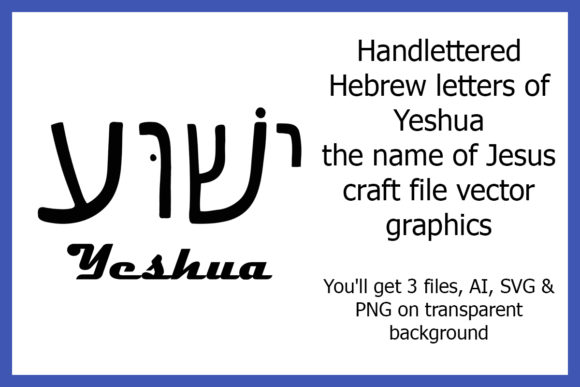
The name Yeshua (ישוע) is written from right to left with four Hebrew letters: Yod (י), Shin (ש), Vav (ו), and Ayin (ע). Each letter has a name, a numerical value, and a pictographic origin. In the context of biblical studies, linguistic exploration, or spiritual practice, these letters are not just characters — they are carriers of meaning that predate modern English translations by millennia.
When you work with the Hebrew letters of Yeshua, you are engaging with a pre-Christian, Semitic framework. This matters because it shifts the perspective from a Greco-Roman lens to an Eastern, Hebraic one. For anyone building content, lessons, or personal study habits, this shift in viewpoint is one of the most practical outcomes you can gain.
Each letter also carries a numeric value (gematria): Yod = 10, Shin = 300, Vav = 6, Ayin = 70. The total is 386. Some scholars and practitioners use these values for comparative study, cross-referencing with other Hebrew words or passages. Whether you use gematria or not, the numerical layer adds depth to any research or teaching workflow.
Where This Fits Into a Broader Process
Understanding the Hebrew letters of Yeshua is rarely an isolated activity. More often, it fits into a larger process such as:
- Preparing a sermon, article, or blog post on the original languages of Scripture
- Designing a small group study or educational curriculum
- Creating visual or artistic work that incorporates Hebrew script
- Developing a personal devotional or journaling practice
- Writing a book or research paper on biblical names and their meanings
- Building a website or resource hub about Hebraic roots of Christianity
In each of these contexts, the Hebrew letters of Yeshua function as a primary source element. They are not just decoration — they are a point of reference that grounds your work in the original language. This makes your output more credible and more useful to audiences who value accuracy and depth.
Before a Project: Planning and Preparation
If you are starting a project that involves biblical names, original languages, or Hebrew roots, the first step is to establish a solid reference base. Before you write a single paragraph or design a single slide, take time to understand the Hebrew letters of Yeshua at a structural level.
Here is a practical preparation workflow:
- Source reliable transliteration and pronunciation guides. Know the difference between Yeshua, Y'shua, Yehoshua, and Jesus. Each variation has a linguistic history.
- Learn the letter shapes and names. Yod, Shin, Vav, Ayin. Practice writing them or at least recognizing them in block script.
- Understand the pictographic origins. For example, Shin originally represented teeth or pressing, and Ayin represented an eye. These visual roots can inform your interpretation.
- Collect context. Find where Yeshua appears in Hebrew texts, such as in the Tanakh or later Hebrew manuscripts of the New Testament.
- Decide how you will use the information. Will you include the Hebrew script in your output? Will you explain each letter? Will you focus on meaning, numerology, or historical usage?
This preparation phase ensures that you are not guessing or relying on secondhand summaries. It also makes the rest of your workflow more efficient because you have a clear foundation to draw from.
During a Project: Practical Integration
Once you are in the middle of writing, teaching, or creating, the Hebrew letters of Yeshua can be integrated in several tangible ways. The key is to use them as a tool for clarity and depth, not as a gimmick.
In Writing and Content Creation
If you are writing an article, book chapter, or blog post, you can weave the Hebrew letters into your narrative naturally. For example:
- Explain that Yeshua begins with Yod, the smallest letter, which carries the meaning of hand or deed. This can lead into a discussion about action and humility.
- Highlight Shin, the central letter, which often represents fire or divinity. This creates a bridge to themes of purification or presence.
- Note that Vav functions as a hook or connector, linking words and ideas — a useful metaphor for connection and covenant.
- Show that Ayin means eye or sight, which opens into discussions about perception, revelation, or spiritual awareness.
When you present these insights, you are not just listing facts. You are helping your reader see the name as a layered construct rather than a flat label. This approach works well for audiences that appreciate depth without excessive academic jargon.
In Teaching and Presentation
If you are leading a group, consider using a visual display of the Hebrew letters of Yeshua. Show the letters side by side with their transliterations. Walk through each letter one at a time, and invite questions. This structured breakdown helps learners retain the information because they are not just hearing a name — they are seeing its components and understanding how they fit together.
You can also use the letters as prompts for discussion. For example:
- "What does it mean that the name begins with a Yod, the smallest letter?"
- "How does the Shin, with its three branches, relate to other symbolic triads?"
- "Why does the name end with Ayin, the letter of sight?"
These questions turn a passive listening session into an active learning experience. They also make your teaching more memorable.
In Visual and Artistic Work
If you are designing graphics, calligraphy, or other visual content, the Hebrew letters of Yeshua offer strong visual material. The shapes are distinctive and carry cultural weight. When you use them in a design, be careful to preserve the correct script orientation and letter forms. Inaccurate use can undermine credibility.
Practical tip: Pair the Hebrew script with a transliteration and a short explanation of each letter's meaning. This turns a simple visual into an educational tool. It also makes your work accessible to people who do not read Hebrew.
After a Project: Review and Long-Term Use
Once you have completed a project that involved the Hebrew letters of Yeshua, take time to review how the information was received and how it functioned within your workflow. Ask yourself:
- Did the Hebrew script add clarity or confusion?
- Did the letter-by-letter breakdown help my audience understand the name more deeply?
- What resources did I rely on, and were they accurate?
- How can I improve my own knowledge of Hebrew for future projects?
Long-term, you can build a reference file or digital folder with reliable sources, charts, and examples. This makes future projects faster and more consistent. You might also develop a simple template or outline that you reuse for different contexts — for example, a standard format for explaining the Hebrew letters of Yeshua that you can adapt for articles, lessons, or social media posts.
Practical Implementation Tips
Here are some actionable tips to help you integrate the Hebrew letters of Yeshua into your work or routine without overcomplicating the process:
- Start with one letter. Do not try to explain all four at once. Focus on Yod or Shin first, and build from there.
- Use reliable transliteration. Spell Yeshua consistently. Avoid mixing systems unless you explain the differences.
- Provide context. Explain why the Hebrew letters matter for your specific topic. Do not assume the reader already knows.
- Pair with English. Always include the English equivalent or transliteration alongside the Hebrew script.
- Cite your sources. If you use gematria, pictographic meanings, or historical references, mention where the information comes from.
- Test your explanations. Have someone unfamiliar with Hebrew read your content and tell you if it makes sense.
- Update your knowledge. Hebrew scholarship evolves. Check newer resources periodically to ensure accuracy.
Common Pitfalls to Avoid
Working with the Hebrew letters of Yeshua is rewarding, but there are a few mistakes that can reduce the quality of your output:
- Assuming every Hebrew letter has one fixed meaning. Pictographic interpretations vary. Present them as possibilities, not absolute definitions.
- Mixing Hebrew and Aramaic without clarification. Yeshua is a Hebrew name, but it also appears in Aramaic contexts. Be clear about which language you are discussing.
- Overusing gematria. Numerology is interesting, but it can become a distraction if not tied to a clear point.
- Ignoring the broader context of the name. The Hebrew letters of Yeshua do not exist in a vacuum. They connect to other Hebrew names, words, and passages.
- Writing for experts only. If your audience is general, avoid dense academic language. Keep explanations clear and grounded.
How This Fits Into a Larger Workflow
Whether you are a blogger, educator, or creative professional, the Hebrew letters of Yeshua can be a recurring element in your work. They are not a one-time topic. They can appear in:
- Series of posts or lessons on Hebrew names
- Comparative studies of Yeshua and other biblical names
- Visual projects that explore the beauty of Hebrew script
- Devotional or reflective writing that uses letter meanings as prompts
- Curriculum modules for small groups or online courses
By treating the Hebrew letters of Yeshua as a resource rather than a single topic, you create a sustainable way to revisit and reuse your research. Each new project builds on the last, and your depth of understanding grows over time.
Final Observations
Working with the Hebrew letters of Yeshua is not about exoticism or novelty. It is about recovering a layer of meaning that is embedded in the original language of the name. For anyone who writes, teaches, or creates with depth as a goal, this is a practical tool that adds substance to your work.
The process does not require fluency in Hebrew. It requires curiosity, a willingness to verify your sources, and a habit of explaining things clearly. The Hebrew letters of Yeshua — Yod, Shin, Vav, Ayin — are four small characters, but they carry a weight that can enrich your projects for years to come.
Start small. Focus on accuracy. Let the letters speak for themselves, and your audience will thank you for it.