Even Jesus Had a Fish Story SVG Cut File: How to Integrate It Into Your Creative Workflow
The phrase “Even Jesus Had a Fish Story” carries a playful, relatable twist on a well-known biblical narrative. For designers, crafters, and small business owners, the Even Jesus Had a Fish Story SVG Cut File offers a ready-to-cut digital design that can be used across a wide range of physical and digital projects. But simply having the file means little without a clear plan for when and how to use it. This article walks through exactly how this SVG fits into a practical creative process—from preparation to final product—and how you can integrate it smoothly into your existing workflow.
What the Even Jesus Had a Fish Story SVG Cut File Actually Is
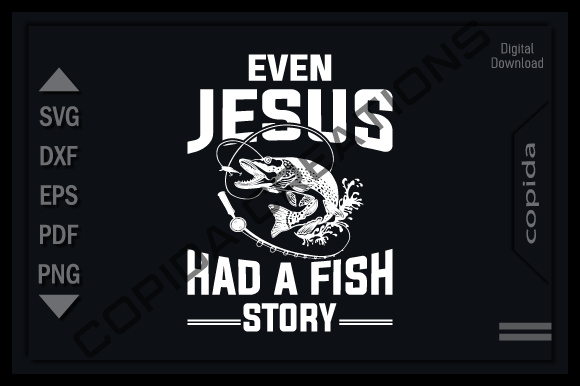
An SVG (Scalable Vector Graphics) cut file is a digital asset designed for use with cutting machines like Cricut, Silhouette, or Brother ScanNCut, as well as for laser engraving and print-on-demand platforms. The design itself often depicts a fish outline combined with text—typically a modern, hand-lettered or bold font rendering of “Even Jesus Had a Fish Story.” Some versions include decorative elements such as waves, hooks, or a subtle cross. The file preserves clean vector paths, making it scalable without loss of quality. This means you can resize it from a tiny vinyl decal to a large wall sign without pixelation or jagged edges.
Where It Fits in a Broader Creative Process
Every project follows a lifecycle: concept, asset creation or acquisition, preparation, production, finishing, and distribution. The Even Jesus Had a Fish Story SVG Cut File enters the workflow at the asset stage, but its integration touches nearly every other phase. Understanding this placement helps you plan rather than react.
Before the Project: Planning and Sourcing
When you’re mapping out a product line or a gift idea, having a library of thematic SVGs saves time. This particular file is ideal for faith-based merchandise, church group activities, or personal devotional crafts. Before you open your cutting software, decide on the substrate (vinyl, iron-on, cardstock, wood veneer), the size needed, and the final application (t-shirt, mug, sign, sticker). The SVG’s clean lines mean you can confidently plan for multi-layered projects—for example, using a separate color for the fish and another for the text—without worrying about complex nesting or overlapping shapes.
During the Project: Preparation and Cutting
Once you’ve acquired the file (typically as a downloadable ZIP containing SVG, DXF, PNG, and sometimes EPS), the next step is import into your design software. Most users work in Cricut Design Space, Silhouette Studio, or an alternative like Inkscape. The Even Jesus Had a Fish Story SVG Cut File imports as a single grouped object. You’ll want to ungroup it only if you plan to separate the text from the fish or adjust individual anchor points. For most standard cuts, leaving it grouped is safer and more efficient.
Before cutting, check the file’s dimensions. Many designers set the SVG at a default width of around 8–12 inches. Scale it to your target size, but keep aspect ratio locked. If your cutting mat isn’t large enough, you can split the design into two halves—but because this is a relatively compact statement piece, it usually fits within a 12×12 or 10×12 mat. Use the “contour” or “hide” function to remove any unwanted layers (some files include an inner shadow or a duplicate outline that you may not need).
Key Preparation Checklist:
- Verify file version – Ensure the SVG version is compatible with your software (SVG 1.1 is standard).
- Check for overlapping lines – Zoom in on the text edges; if you see extra tiny shapes, use the weld tool (Design Space) or union function (Silhouette Studio) to combine them.
- Mirror if using iron-on – For heat transfer vinyl, remember to mirror the entire design before cutting.
- Set material type – Adjust blade depth and pressure based on whether you’re cutting adhesive vinyl, printable fabric, or cardstock.
After the Project: Finishing and Distribution
Post-cutting, the Even Jesus Had a Fish Story SVG Cut File can still influence your workflow. The weeding process—removing excess material from the cut design—is straightforward thanks to the design’s solid areas and large text. The fish body often has a clear interior that weeds easily, while letters like “e” and “a” may require a weeding tool and patience. If you used transfer tape, apply it firmly, burnish well, and peel slowly to avoid lifting small letters.
Once the cut is transferred to its final surface, you have a physical product ready for gifting, selling at a craft fair, or adding to an online shop. You can also reuse the SVG file for different bases—cut a batch of vinyl decals, then use the same file for heat transfers on fabric. This repurposing is where the SVG’s value multiplies.
Integration with Tools and Platforms
The Even Jesus Had a Fish Story SVG Cut File doesn’t live in isolation. It interacts with your design software, cutting machine, and even your marketing channel. If you sell your finished items on Etsy or at local markets, consistency across products matters. Use the same SVG to create iron-on t-shirts, adhesive phone grips, and painted wood signs. Customers recognize the design, which builds brand recognition.
For digital creators who make mockups or social media graphics, the SVG can be opened in Adobe Illustrator or Canva to create promotional content. Export the design as a PNG with a transparent background and place it on a shirt mockup in seconds. This reduces the gap between producing a physical cut and generating online listings.
Practical Implementation Tips
Long-term use of any SVG file depends on organization, quality control, and adaptability. Here are process-focused tips specifically for the Even Jesus Had a Fish Story SVG Cut File:
- Store smartly – Keep your SVGs in a clearly named folder on your computer or cloud drive. Use a naming convention that includes the project type and material (e.g., “JesusFishStory_HTV_10in”). This saves time when you’re rushing to cut a batch for an event.
- Test cut before bulk production – Always do a small test cut on scrap material. Check that the cutting pressure is correct for your specific brand of vinyl. A bad cut ruins material and wastes time.
- Scale thoughtfully – The design has a horizontal orientation (text plus fish). For a mug, you’ll likely need to scale down and maybe rotate the design to fit the curved surface. For a tote bag, keep it large and centered. Test the scale visually by projecting an image onto your item before cutting.
- Layer strategically – If you want a multicolor design, consider cutting the fish from a separate color vinyl than the text. The SVG typically has the fish as a single path, so you can duplicate the file, delete the text from one layer, and keep the fish in another. This gives you precise control without redrawing.
- Keep a backup copy – Sometimes software updates break older SVG files. Maintain a simple backup of the original download, plus an unedited version saved in Inkscape or Illustrator format for future editing.
Workflow Examples
Here are three concrete scenarios showing how the SVG integrates into real routines:
Scenario 1: Faith-Based Small Business Owner
Maya runs an Etsy shop selling Christian-themed decor. She purchases the Even Jesus Had a Fish Story SVG Cut File and immediately imports it into Design Space. She creates three product variations: one large door sign (cut from 3mm birch plywood using a laser attachment), one set of stickers (cut on a Cricut Maker), and one stencil for a painted canvas. She uses the same SVG but adjusts the cut settings for each material. By keeping the original SVG untouched, she can revisit and resize without corruption. Her workflow is streamlined because the SVG is vector, so she never has to redraw the text.
Scenario 2: Church Volunteer Coordinator
A church group plans a family event with a “fish story” theme. The coordinator downloads the SVG, scales it down, and cuts 50 small iron-on patches for kids’ tote bags. Before the event, she tests one patch on an old bag to confirm the heat press temperature (300°F for 30 seconds). On the day, volunteers quickly apply the patches using a heat press. The process from download to finished product takes less than two hours because the SVG is ready to cut—no design work needed. The file’s simplicity reduces errors.
Scenario 3: Freelance Graphic Designer
Alex, a designer, uses the SVG as a base for a social media post for a client. He opens the SVG in Illustrator, changes the text color to white, adds a subtle drop shadow, and exports it as a PNG. Then he uses that PNG in Canva to create an Instagram post. The SVG’s clean curves allow him to modify individual letter anchors for a custom look. He later repurposes the edited version for a vinyl cut order. The SVG serves both digital and physical outputs without additional tracing.
Quality Control and Long-Term Use
Consistency matters when you reuse an SVG multiple times. Always check for stray points or tiny gaps after scaling. Some SVGs have overlapping paths that cause a cut to halt or produce jagged edges. Use the “view as outline” or “wireframe” mode in your software to inspect. If you notice imperfections, use a redraw or simplify tool. For the Even Jesus Had a Fish Story SVG Cut File, the design is usually well-optimized, but it’s good practice to verify.
Long-term, this file can become a staple in your SVG library. Because the phrase has a timeless quality and the visual of the fish is universally recognized, you can use it across seasons—not just for Easter or Vacation Bible School. Keep it organized under a “Faith & Messages” folder alongside other versatile designs. When you’re brainstorming a quick prototype, having this file ready means you can go from idea to cut in under ten minutes.
The real power of any SVG cut file is not in the file itself but in how you integrate it into your process. The Even Jesus Had a Fish Story SVG Cut File offers a clear, scalable, and themed design that supports everything from rapid prototype cuts to bulk production. By planning how you store, prepare, test, and repurpose it, you turn a simple digital asset into a reliable component of your creative workflow.