Floral Christian Cross: A Design-Driven Evaluation of Its Practical and Symbolic Value
The intersection of sacred symbolism and botanical design has produced a rich visual language across centuries. Among these hybrid forms, the Floral Christian Cross stands out as a particularly resonant motif. It combines the geometric clarity of the cross with the organic fluidity of flowers, leaves, and vines. This article examines what the Floral Christian Cross actually is, where it holds real practical value, and how professionals across creative and faith-based fields can evaluate its usefulness for their own work.
Understanding the Floral Christian Cross as a Visual Concept
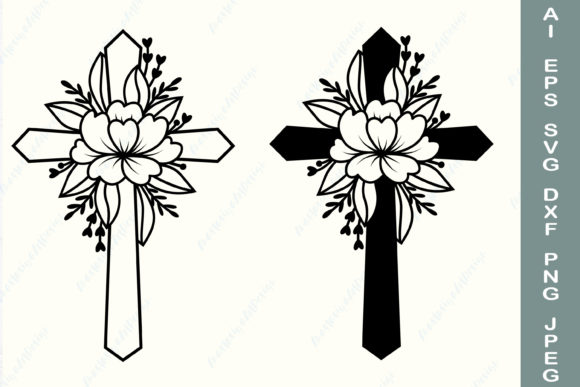
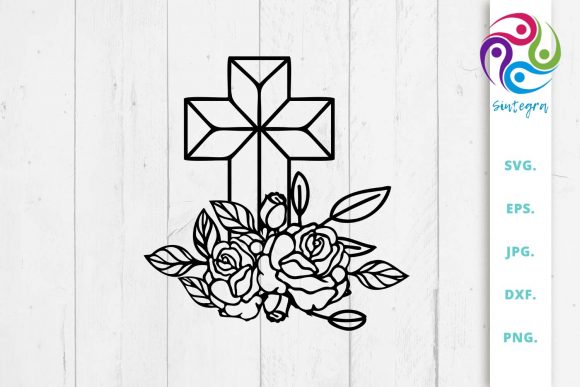
A Floral Christian Cross is essentially a crucifix or plain cross design that incorporates floral elements into its structure, background, or ornamentation. The flowers may weave around the cross, grow from its base, or replace parts of the cross itself. Common botanical motifs include roses, lilies, ivy, olive branches, and wheat stalks. Each carries its own symbolic weight: roses for love and sacrifice, lilies for resurrection and purity, ivy for fidelity and eternal life.
What makes the Floral Christian Cross worth discussing is its dual functionality. It serves both as a religious symbol and as a piece of decorative art. Unlike a plain cross, which communicates primarily through its shape, the floral version adds layers of meaning through botanical associations. This makes it suitable for contexts where the cross needs to feel less austere and more approachable, while still retaining its core identity.
From a design perspective, the Floral Christian Cross is not a single style but a category encompassing everything from intricate hand-drawn illustrations to minimalist vector graphics, from watercolor paintings to laser-cut woodwork. The floral element can be subtle or dominant, naturalistic or stylized, monochrome or multicolored. This variability is both a strength and a consideration, depending on the intended use case.
Visual Versatility Across Mediums
One of the most immediately useful traits of the Floral Christian Cross is its adaptability. A well-crafted floral cross can work equally well on a printed wedding invitation, a church website banner, a memorial program, or an embroidered vestment. The floral component softens the rigid lines of the cross, making it more accessible to audiences who may not respond to stark religious imagery. At the same time, it retains enough structural clarity to be immediately recognizable as a cross.
For professionals who work across print, digital, and physical media, this versatility reduces the need to maintain multiple design variations. A single strong Floral Christian Cross asset can be repurposed across formats with minimal adjustment, provided it was created at a sufficient resolution and with clean vector or transparent background support.
Symbolic Depth Without Preaching
The Floral Christian Cross communicates meaning without requiring explicit text or doctrinal explanation. The flowers themselves carry cultural and spiritual connotations that many viewers already understand. A lily at the base of a cross suggests resurrection and renewal. A rose entwined around the crossbar evokes love and sacrifice. Olive branches imply peace. This symbolic shorthand is valuable for designers and content creators who need to convey Christian themes without sounding didactic or overly theological.
This is especially relevant for audiences aged 20 to 50, many of whom engage with spirituality in more personal, less institutional ways. The Floral Christian Cross meets them where they are: visually oriented, symbolically aware, and often more receptive to imagery than to written doctrine.
Emotional Warmth and Approachability
A plain cross can sometimes read as severe, especially in minimalist or modern contexts. The addition of floral elements introduces organic curves, soft colors, and natural life. This shifts the emotional register from solemnity to warmth. For memorial materials, Easter promotions, wedding ceremonies, or grief resources, this emotional tone is often more appropriate and effective.
In my experience evaluating design assets for client use, the Floral Christian Cross consistently performs well in contexts where the audience needs comfort rather than confrontation. It is not a tool for theological debate. It is a tool for visual communication that respects the viewer's emotional state.
Who Benefits Most from the Floral Christian Cross
Based on practical observation across multiple projects, the following groups tend to gain the most value from incorporating Floral Christian Cross designs:
- Church communications directors and ministry leaders who need seasonal graphics for Easter, Mother's Day, weddings, or memorial services. The floral cross fits naturally into bulletins, slides, social media posts, and printed programs.
- Freelance graphic designers serving faith-based clients. Having a library of floral cross assets allows them to deliver polished work quickly without reinventing the wheel for every project.
- Florists and event planners who design for Christian ceremonies. The Floral Christian Cross provides inspiration for altar arrangements, bouquet shapes, and decor themes.
- Content creators and bloggers writing about faith, spirituality, or religious art. The floral cross serves as a strong visual anchor for articles, devotionals, or social media content.
- Small business owners producing religious merchandise such as greeting cards, wall art, apparel, or home decor. The floral cross appeals to a broad demographic that appreciates both faith and design.
Contexts Where the Floral Christian Cross Excels
In practice, the Floral Christian Cross works best in settings where the audience already has some openness to Christian symbolism. It is less effective as a proselytizing tool and more effective as a reinforcement of existing faith or as a respectful nod to tradition.
For example, a floral cross on a wedding invitation tells guests that the ceremony will be Christian but also warm and celebratory. A floral cross on a memorial card acknowledges grief while pointing toward hope. A floral cross in an Easter social media graphic signals joy and renewal without requiring a caption full of theological language.
These are not hypothetical scenarios. I have seen them executed well and poorly. The difference usually comes down to the quality of the floral integration. When the flowers feel like an afterthought plastered on top of a cross, the result looks cluttered and amateurish. When the floral elements are woven into the structure of the cross itself, the result feels intentional and cohesive.
What to Look for in a Floral Christian Cross Asset
If you are evaluating a Floral Christian Cross for purchase or creation, the following criteria are worth considering:
- Resolution and scalability. A vector format (SVG, AI, EPS) is ideal because it allows the cross to be resized without loss of quality. Raster formats (PNG, JPG) should be at least 300 DPI for print use.
- Transparency support. A cross with a transparent background is far more useful than one locked into a white or colored rectangle. It can be placed over any background without awkward borders.
- Botanical accuracy. Flowers should be recognizable as themselves. A generic blob of petals does not carry the same symbolic weight as a clearly rendered lily or rose.
- Structural balance. The floral elements should not obscure the cross shape to the point where it becomes ambiguous. The cross must remain the focal point unless the intent is fully abstract.
- Color palette. Neutral or natural tones tend to age better than trendy neon or pastel combinations. That said, a well-designed floral cross in a specific palette can work beautifully for a targeted campaign.
Consistency Across a Series
Professionals producing a series of materials such as a liturgical season or a multi-week event should ensure that their Floral Christian Cross assets follow a consistent style. Mixing a watercolor floral cross with a flat vector floral cross in the same campaign creates visual dissonance. It is better to choose one style and apply it consistently across all touchpoints.
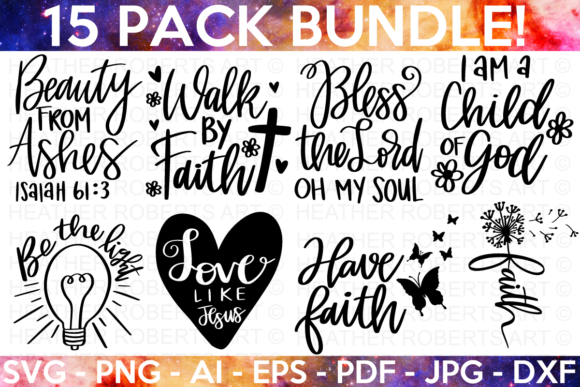
This is where pre-made asset packs can be either a blessing or a trap. Some packs offer multiple variations that share a cohesive style, making them ideal for series work. Others are a collection of mismatched designs that look fine individually but fall apart when used together. Review the entire pack before committing.
Possible Limitations and Realistic Considerations
No design concept is universally applicable, and the Floral Christian Cross has its limitations. It is not well suited for contexts that demand extreme minimalism or strict doctrinal precision. A Reformed or Anabaptist congregation that favors unadorned symbolism may find floral ornamentation distracting or inappropriate. Similarly, a high-end luxury brand seeking a clean cross logo may prefer a stark geometric version over a floral one.
There is also the risk of over-feminization. Because floral motifs are culturally coded as feminine, a heavily floral cross may read as exclusively female-oriented. This can be appropriate for a Mother's Day service or a women's retreat, but it may alienate male audience members in mixed-gender contexts. Designers can mitigate this by using more structural, less delicate floral forms such as ivy, wheat, or olive branches rather than roses or daisies.
From a production standpoint, highly intricate floral crosses may not reproduce well at small sizes. A laser cutter may lose detail on a tiny pendant. A screen may render fine leaf veins as a blur. Always test the design at the intended output size before finalizing.
Practical Recommendations for Professionals
If you are considering using a Floral Christian Cross in your work, start by defining the emotional and symbolic goal. What should the viewer feel? What should they understand without reading a word? Then select a style that aligns with that goal.
For digital-first projects, prioritize vector files with clean lines and moderate detail. For print projects, consider watercolor or hand-drawn styles that add texture and warmth. For physical products, ensure the design is structurally sound for the chosen material.
Build a small library of two or three floral cross styles that you can rotate depending on the season or audience. This gives you flexibility without forcing you to start from scratch each time. And always test the design with a sample of your target audience before full deployment. A floral cross that feels warm to you may feel saccharine to someone else.
The Floral Christian Cross is not a universal solution, but it is a genuinely useful tool in the right hands. When chosen with intention and executed with care, it bridges the gap between sacred tradition and contemporary visual culture in a way that few other symbols can. For professionals who serve faith-based audiences, it deserves a place in the creative toolkit.