My Lifeguard Walked on Water Christian: A Practical Evaluation
When evaluating Christian resources for personal use, family teaching, or ministry settings, the phrase My Lifeguard Walked on Water Christian may appear as a potential option. This article provides a balanced, objective look at what this resource offers, who it might serve, and what tradeoffs to consider before committing to it. The goal is to help you determine whether it aligns with your specific goals and needs.
What Is My Lifeguard Walked on Water Christian?
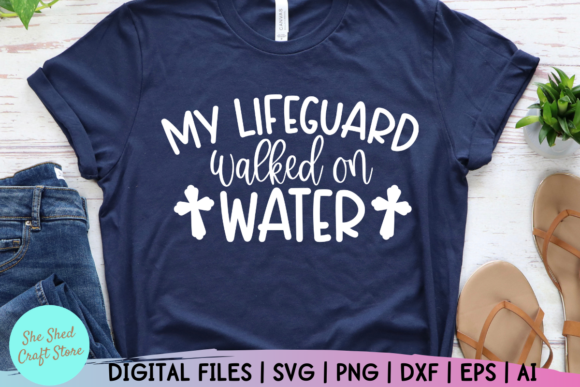
My Lifeguard Walked on Water Christian is a faith-based resource that uses the biblical account of Jesus walking on water as a central metaphor. The "lifeguard" represents Jesus as a rescuer and protector, while the act of walking on water underscores His divine nature and authority over creation. The resource is typically designed to communicate foundational Christian truths—such as salvation, trust, and God's power—in a way that is accessible to children and families.
While exact formats vary, the resource often appears as a children's book, a curriculum supplement for Sunday school, or a family devotional guide. It may also be used in Vacation Bible School (VBS) settings. The core message is that Jesus is the ultimate lifeguard who can save, guide, and sustain believers even in life's storms.
Why Someone Might Be Interested
Many individuals and groups look for resources that make biblical concepts tangible and memorable. My Lifeguard Walked on Water Christian appeals to several specific motivations:
- Engaging metaphors for children: The lifeguard imagery is familiar and comforting, making abstract ideas about salvation easier to grasp.
- Focus on a familiar Bible story: The walking-on-water account (Matthew 14:22-33) is well-known, and this resource builds on that foundation.
- Desire for gospel-centered content: The resource directly presents Jesus as Savior, which aligns with the core message of many Christian ministries.
- Need for ready-to-use material: For busy parents or teachers, having a structured resource saves preparation time.
Benefits and Tradeoffs
No resource is perfect for every situation. Understanding both the strengths and limitations of My Lifeguard Walked on Water Christian is essential for making an informed decision.
Benefits
- Clear and relatable imagery: The lifeguard analogy is intuitive. Most children (and adults) understand the role of a lifeguard, so the connection to Jesus as a rescuer can be made quickly.
- Gospel emphasis: The resource does not shy away from presenting Jesus as the only way to salvation. This is a priority for many Christian families and ministries.
- Engagement potential: Because it centers on a dramatic miracle, the story naturally captures attention. The resource often includes discussion questions or activities that reinforce the lesson.
- Flexible format: Depending on the version, it can be used in one-on-one settings, small groups, or larger classroom environments.
Tradeoffs
- Limited theological depth: For older children, teens, or adults, the resource may feel too simplistic. The lifeguard metaphor, while helpful, can only carry so much weight. Those seeking deeper doctrinal exploration might need supplemental materials.
- Narrow scriptural focus: The resource concentrates on one passage. If your goal is to cover a broader biblical narrative or a systematic theology, this one resource will not suffice.
- Potential overfamiliarity: For children who have already heard the walking-on-water story many times, the resource might not offer a fresh perspective unless the activities or presentation are particularly creative.
- Contextual fit: The lifeguard metaphor works best in settings where water safety and lifeguards are common references. In inland or non-swimming cultures, the analogy may require additional explanation.
Considerations and Expectations
When you choose My Lifeguard Walked on Water Christian, it is helpful to know what to expect in practice:
- Age range: Most versions target early elementary children (ages 4–8). Some adaptations may work for preschoolers or older children, but the core content is geared toward younger audiences.
- Time commitment: A typical session using the resource might last 15–30 minutes, including reading, discussion, and an activity. This makes it manageable for busy families or short class periods.
- Teacher or parent preparation: Minimal preparation is usually required. The resource often comes with talking points and simple instructions, so even those with limited teaching experience can use it effectively.
- Supplementary materials: Some versions include coloring pages, craft ideas, or memory verses. These can extend the lesson and reinforce the message through multiple modalities.
It is important to set realistic expectations. This resource is not designed to replace a comprehensive Bible curriculum. Instead, it serves as a focused tool that can complement other teaching. If you are looking for a resource that covers a wide range of biblical themes or provides extensive doctrinal explanation, you may need to combine it with other materials.
Situations Where It Is a Strong Fit
My Lifeguard Walked on Water Christian works particularly well in the following contexts:
- Family devotionals with young children: Parents who want to introduce their preschoolers or early elementary kids to Jesus as Savior in a simple, memorable way will find this resource useful.
- Sunday school or children's church: Teachers who need a ready-to-go lesson on the walking-on-water story can use this as a standalone session or as part of a series on Jesus' miracles.
- Vacation Bible School (VBS) or camp settings: The lifeguard theme fits naturally with water-related VBS themes. It can be used as a lesson or as a take-home resource for families.
- Outreach events: Because the metaphor is accessible, the resource can be used in community events where not all families have a church background. It presents the gospel in a non-threatening, understandable way.
- Gift giving: For baptisms, first communions, or other milestones, this resource serves as a meaningful gift that reinforces faith basics.
Situations Where Alternatives May Be Worth Considering
In some scenarios, My Lifeguard Walked on Water Christian may not be the best fit. These situations include:
- Teaching older children or teens: If your audience expects more theological depth or critical engagement with the text, consider resources that explore the historical context, Greek word studies, or application for older youth. Books like The Jesus Storybook Bible (for younger children) or Case for Christ for Kids might offer broader coverage.
- Adult small groups or Bible studies: The resource is designed for children. Adults would find it too basic. For adult study of the walking-on-water passage, consider commentaries or inductive Bible study guides.
- Comprehensive curriculum needs: If you are planning a full year of Christian education, you will need a series that covers multiple doctrines and biblical books. This resource is a single-topic tool.
- Highly liturgical contexts: Churches that follow a lectionary or catechism may want resources that align with specific theological traditions or seasonal readings.
- Children with advanced reading levels: Some children may be ready for more complex narratives or chapter books. For them, this resource might feel too young or brief.
In these cases, looking for alternatives that match the developmental stage and learning goals of the audience will likely yield better results. That said, My Lifeguard Walked on Water Christian could still be used as a supplement, even if it is not the primary resource.
Practical Decision-Making Insights
To decide whether My Lifeguard Walked on Water Christian aligns with your goals, consider the following steps:
- Identify your primary audience. Are you teaching a 4-year-old, a group of 7-year-olds, or a mixed-age family? Match the resource to the youngest or least experienced learner in the group.
- Define your learning objective. Is the goal to introduce Jesus as Savior, to teach about faith and fear, or to simply enjoy a Bible story together? This resource works best when the objective is clear and focused on the gospel.
- Assess your time and preparation capacity. If you have limited time, this resource's low-prep nature is a strong advantage. If you have more time and want to dive deeper, plan to supplement with additional activities or discussions.
- Consider the broader curriculum. If this resource is part of a series, check how it fits with the other lessons. If it is a standalone, evaluate whether it provides enough context for the story (the walking-on-water account includes Peter's attempt, which is a key discipleship lesson).
- Test it with a small group. Before rolling out to a larger class or program, try using the resource with one child or a small group. Observe their engagement level and whether the metaphor resonates.
- Gather feedback from other leaders or parents. If you are in a ministry setting, ask colleagues whether they have used the resource and what results they saw. Firsthand experience can reveal nuances not obvious from a description.
Ultimately, the value of My Lifeguard Walked on Water Christian depends on how well it serves your specific context. By weighing the benefits and tradeoffs, considering alternative resources when appropriate, and applying the insights above, you can make a confident decision that supports the spiritual growth of those you teach.
Remember that no single resource can cover every need. The most effective approach often involves a combination of materials, prayerful reflection, and responsiveness to the learners in front of you. Whether this resource becomes a core part of your toolkit or a supplemental item, its focus on Jesus as the ultimate lifeguard can leave a lasting impression.